Dental Implants for Complex Cases: Advanced Treatment Solutions
Dental implant treatment is often described in simple terms: replace a missing tooth with a titanium fixture, allow it to heal, attach a crown, restore function. That description is accurate for straightforward cases, but it leaves out a large and important part of implant dentistry. Many patients who need implants do not arrive with ideal bone, healthy gums, stable bites, and a clean medical history. They come with years of tooth loss, failed bridges, old dentures, severe wear, advanced periodontal disease, trauma, sinus expansion, or systemic conditions that complicate healing.
Those are the cases that test judgment more than technique.
Complex implant care is rarely about one dramatic procedure. More often, it is about sequencing. The clinician has to decide what must be treated first, what can be preserved, what needs rebuilding, and what level of risk is acceptable for that individual patient. A good outcome depends on far more than placing an implant in bone. It depends on biology, force management, prosthetic planning, hygiene access, and patient habits that continue long after the surgery is over.
What makes an implant case complex
A case becomes complex when routine protocols no longer fit the anatomy or the patient. Sometimes the issue is local. The jawbone may be too narrow, too short, or too soft to anchor an implant predictably without augmentation. In other cases, the complexity is mechanical. A patient may clench heavily, have a collapsed bite, or need full-arch rehabilitation rather than replacement of a single tooth. Often, complexity comes from a combination of factors.
A patient who has worn a removable denture for fifteen years gives a familiar example. The denture may have functioned reasonably well at first, but the underlying bone has gradually resorbed. By the time the patient seeks implants, the ridge can be thin and flattened, with limited vertical height and compromised soft tissue support. Placing implants is no longer just a matter of finding space. It becomes an exercise in rebuilding the foundation.
Medical considerations matter too. Diabetes, smoking, past radiation therapy, osteoporosis treatment, autoimmune disease, and medications that affect bone turnover can all change the risk profile. None of these factors automatically rule out Dental Implants, but they often demand a slower, more selective approach. The best treatment plan is not always the most aggressive one. It is the one that balances restoration goals with predictable healing.
Diagnosis drives everything
The most successful complex implant cases are planned backward from the final restoration. That sounds obvious, yet many problems in implant dentistry start when the implant position is treated as the goal rather than the means. If the final teeth cannot be cleaned, if the bite overloads the fixtures, or if the smile line exposes a ridge defect that was not addressed, the implant may technically integrate and still fail the patient.
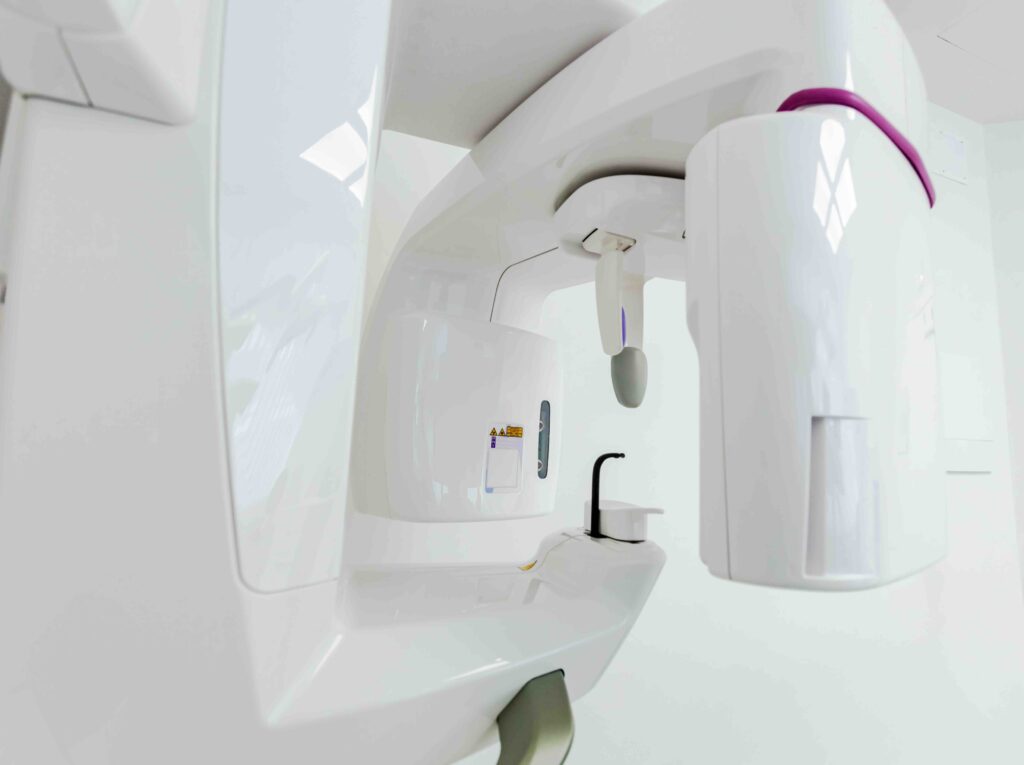
Three-dimensional imaging has changed the standard of care in difficult cases. A cone beam CT scan reveals width, height, angulation, sinus anatomy, nerve location, and cortical density in a way a two-dimensional film cannot. It also shows pathology that would otherwise be missed, retained root fragments, dehiscence defects, concavities in the anterior mandible, or sinus septa that complicate augmentation.
Digital planning is useful, but it should not create false confidence. Software can simulate ideal implant positions with elegant precision. Real mouths do not always cooperate. Mouth opening may be limited. Soft tissue may be mobile. Bone quality may feel very different during surgery than it appeared on the scan. Experienced implant clinicians use digital planning as a tool, not a substitute for intraoperative judgment.
Diagnostic wax-ups, provisional restorations, and surgical guides all have a place in advanced cases. When used thoughtfully, they reduce surprises and improve communication between surgeon, restorative dentist, and laboratory. That team approach is not a luxury. In complex treatment, it is often the difference between a prosthesis that merely fits and one that functions naturally.
Bone loss and the need for reconstruction
Bone deficiency is one of the most common reasons an implant case moves into the advanced category. After tooth extraction, the alveolar ridge begins to shrink, especially in the first several months. If years pass before replacement, the available ridge can become significantly narrower and shorter. Infection, trauma, or previous failed surgery can accelerate that loss.
Not all bone defects are the same. Horizontal loss reduces ridge width and often requires ridge augmentation before or during implant placement. Vertical loss is more demanding because it is harder to regenerate reliably and matters greatly in the esthetic zone. Posterior maxillary cases introduce another issue: sinus pneumatization. Once upper molars are lost, the sinus floor often drops, leaving inadequate vertical bone for standard implant placement.
This is where advanced treatment solutions come into play. Guided bone regeneration can rebuild contained defects using graft material and membranes. Ridge split techniques may create width in carefully selected ridges. Block grafts can restore larger deficiencies, though they involve more healing time and technique sensitivity. Sinus elevation, performed through either a crestal or lateral approach depending on the available residual bone, remains one of the most established methods for creating implant support in the posterior maxilla.
What matters clinically is case selection. A small horizontal defect in a healthy nonsmoker is very different from a large vertical defect in a patient with a history of periodontitis and heavy occlusal forces. Both may be treatable, but the conversation about timelines, cost, morbidity, and predictability has to be honest. Patients usually tolerate complexity well when they understand why each phase is needed. They become frustrated when treatment is presented as simple and then repeatedly expands.
Immediate implants, delayed implants, and when patience wins
One of the most misunderstood areas in implant care is timing. Immediate implant placement, where the implant is inserted at the time of extraction, can be an excellent option in selected cases. It preserves treatment momentum, may reduce the number of surgeries, and can be highly effective in the right anatomy. However, it is not automatically better, and in complex cases it can be the wrong choice.
An extraction socket with active infection, missing facial bone, thin soft tissue, or an unfavorable gingival biotype may not support a stable and esthetic immediate result. The temptation to place an implant immediately often comes from the desire to shorten treatment. That instinct should never override biology. Delayed placement, after site preservation and tissue maturation, frequently produces a more predictable foundation.
I have seen this most clearly in the upper front teeth. Patients understandably want a fast cosmetic fix when a central incisor fails. Yet the esthetic demands in that area are unforgiving. A millimeter of tissue recession or a poorly supported papilla can change the entire smile. In many of these cases, the best result comes from a controlled extraction, careful preservation of the socket, provisionalization that shapes the tissue, and implant placement once the architecture is better defined. It is slower, but slower is sometimes more sophisticated.
Full-arch rehabilitation and severe bite collapse
Some of the most transformative outcomes in implant dentistry occur in full-arch cases, particularly for patients with advanced tooth loss, terminal dentition, or severe occlusal collapse. These are also among the most demanding treatments in dentistry.
The problem is not merely missing teeth. Long-term wear, drifting, periodontal breakdown, and overclosure can alter the vertical dimension and the entire relationship between the jaws. If implants are placed without correcting that larger picture, the final prosthesis may be unstable, overcontoured, hard to maintain, or mechanically overloaded.
Full-arch treatment usually begins with a fundamental question: which teeth are genuinely maintainable, and which are not? Patients often want to save every remaining tooth, even when those teeth have poor prognosis. That is understandable, but mixed plans can create their own complications. A few compromised natural teeth retained under a complex prosthesis can become the weak link that jeopardizes the whole reconstruction.
For edentulous or nearly edentulous arches, options range from implant-retained overdentures to fixed full-arch prostheses. The right choice depends on bone availability, dexterity, esthetic expectations, lip support, smile line, budget, and hygiene capacity. A fixed bridge may feel more natural to the patient, but it also demands excellent planning for cleansability and force distribution. In some cases, a high-quality overdenture on strategically placed implants gives better hygiene access and long-term serviceability than a fixed restoration that is difficult to maintain.
That trade-off is not always discussed enough. Patients tend to hear "fixed" and assume it is superior. Clinically, superior means appropriate, not simply more permanent.
The esthetic zone demands restraint
Front-tooth implant cases can be deceptive. On paper, replacing one missing incisor appears simpler than rehabilitating a posterior quadrant. In practice, it may be much less forgiving. Small changes in implant depth, angulation, tissue thickness, or adjacent root spacing can produce visible asymmetry. The esthetic zone does not tolerate shortcuts.
Soft tissue is often the deciding factor. If the ridge has collapsed after trauma or failed endodontic treatment, the implant may integrate perfectly and still leave a long clinical crown or dark emergence profile. Connective tissue grafting, socket preservation, and provisional contours become essential tools, not optional refinements.
One recurring issue in referrals is the implant placed too far facially. Even if osseointegration occurs, the risk of recession rises sharply, especially in thin tissue biotypes. Correcting that problem afterward is difficult and sometimes impossible without removing the implant. That is why prosthetically driven positioning matters so much. The crown shape should emerge from healthy tissue in a way that mimics a natural tooth, not force the tissue to disguise a poor foundation.
Managing risk in patients with systemic or behavioral challenges
Not every complex implant case is anatomically difficult. Some are biologically fragile because of the patient's health status or habits. This is where experience shows in the quality of consent and risk management.
Smoking remains one of the most consistent negative influences on healing and implant maintenance. It affects blood supply, soft tissue response, and long-term peri-implant health. Heavy smokers can still receive implants in some situations, but success rates are less favorable, grafting outcomes are less reliable, and complications are more common. Pretending otherwise does the patient no service.
Poorly controlled diabetes raises similar concerns. A patient with stable glycemic control may do quite well, while a patient with persistently elevated blood glucose faces delayed healing and a higher infection risk. The distinction matters. Medical clearance is useful, but what really helps is coordination with the patient's physician and a realistic view of timing.
Bruxism is another major factor, particularly in posterior and full-arch cases. The implant itself does not have the shock-absorbing periodontal ligament that natural teeth do. Under excessive force, the prosthetic components take the strain. Screws loosen, porcelain fractures, acrylic teeth wear, and bone around overloaded implants can be stressed. This does not mean bruxers cannot have Dental Implants. It means the restorative design, material selection, implant number, and occlusal scheme must reflect that risk, and a night guard is often part of the long-term plan rather than an optional accessory.
When previous implant treatment has failed
Revision implant dentistry is an advanced field in its own right. Failed implants leave behind scar tissue, bone defects, patient distrust, and often a more difficult site than the original one. The reason for failure has to be identified before retreatment begins. Was it lack of primary stability, infection, overload, poor positioning, prosthetic mismatch, or inadequate maintenance? Without that answer, retreatment becomes guesswork.
A failed implant in the posterior mandible might be relatively straightforward to remove and re-site after healing. A failed implant in the esthetic zone is different. Removal can enlarge the defect and further compromise soft tissue. In those cases, a staged approach with defect reconstruction may be required before another implant is even considered. Sometimes the wiser decision is not another implant at all, but a bridge or resin-bonded option that better suits the remaining anatomy.
Patients are often surprised by that recommendation. They assume replacing a failed implant with another implant is the natural next step. Clinically, it is only the right step if the site can support it and the original causes of failure have been addressed.
Surgical skill matters, but maintenance matters more than many expect
The dramatic part of implant treatment is the surgery. The less dramatic part, maintenance, often determines whether the result lasts ten or fifteen years. Complex cases are especially vulnerable because they frequently involve grafted tissue, long-span restorations, difficult cleaning access, or a history of periodontal disease.
Peri-implant disease is not rare, and it is not limited to poorly done cases. Plaque accumulation, residual cement, inaccessible contours, smoking, previous periodontitis, and inconsistent recall all raise the risk. Once bone loss develops around an implant, treatment becomes far less predictable than prevention.
Patients need specific instruction, not generic advice to "keep it clean." They should know where food traps are likely, which flossing or interdental tools fit the prosthesis, how often they need professional maintenance, and what signs deserve attention. Bleeding, swelling, bad taste, or a change in bite should not be ignored just because the implant itself feels solid.
In practice, some of the best long-term implant outcomes occur in patients who are meticulous and consistent rather than those who had the easiest surgery. Discipline outperforms optimism.
Advanced solutions are only as good as the treatment plan
Modern implant dentistry offers remarkable possibilities. Zygomatic implants can serve patients with severely resorbed maxillae in selected centers. Short and narrow implants have expanded options where anatomy is limited. Dynamic navigation, guided surgery, custom abutments, and digital provisional workflows have all improved precision. These are meaningful Dental Implants advances, but technology should never distract from first principles.
An advanced treatment solution is not defined by how elaborate it sounds. It is defined by whether it solves the patient's actual problem with an acceptable level of risk and a clear maintenance pathway.
Sometimes the elegant solution is a staged graft and delayed placement. Sometimes it is a fixed full-arch prosthesis with careful reduction and immediate loading. Sometimes it is a removable overdenture because the lip support and hygiene access are better. And sometimes the best treatment plan is to stabilize disease first, postpone implants, and protect the site until the patient is truly ready.
That kind of restraint is part of expertise. The profession tends to celebrate what can be done surgically. Patients benefit most when clinicians are equally thoughtful about what should be done.
What patients should expect from a serious implant consultation
A thorough consultation for a complex case should feel more like planning a reconstruction than shopping for a procedure. Patients should expect a review of their medical history, a detailed exam, imaging, discussion of alternatives, likely staging, healing intervals, prosthetic options, costs, and maintenance needs. They should also hear where uncertainty lies.
If a clinician presents a difficult case as quick, easy, and universal, that is a warning sign. Complex implant care can be life-changing, but it is rarely simple. The best teams explain both the possibilities and the limits. They make room for the patient's priorities, whether those priorities are esthetics, chewing function, avoiding removable appliances, reducing surgery, or controlling cost.
When done well, Dental Implants in complex cases do more than replace teeth. They restore chewing efficiency, speech confidence, facial support, and daily comfort. Yet the path to that result is built on careful diagnosis, disciplined sequencing, and realistic expectations. Sophisticated treatment is not the product of a single device or a single operation. It is the result of sound decisions made at every stage, from the first scan to the final maintenance visit.
That is what turns a difficult case into a durable one.
Oaks Dental
5000 Parkway Calabasas Suite 308
Calabasas, CA 91302, United States
+1 818-431-2000
FAQ About Dental Implants
What is the downside of a dental implant?
Implants require surgery and a healing period that can last several months. Possible complications include infection, nerve or sinus injury, damage to nearby teeth and failure to bond with bone. Your dentist should assess your health, bone support and alternatives before recommending treatment.
What do dental implants typically cost?
There is no single price for every implant case. The number of teeth replaced, implant components, final restoration and any grafting or extractions affect the total. Request a written estimate covering every stage and confirm insurance benefits and out-of-pocket costs with the practice.
How long do tooth implants last?
An implant can provide long-term support and may last a lifetime with good oral hygiene and regular dental care, but this is not guaranteed. The crown or other restoration may need replacement sooner. Smoking, gum disease and some health conditions can reduce implant success.